

Are you a dentist wondering whether to buy or lease your office space, but afraid of making a costly mistake that could impact your practice’s growth?
This guide written from SQ/FT Brokerage’s expertise, breaks down the pros and cons, financial considerations, and strategic implications of buying vs leasing a dental office space.
You’ll get real-world insights, decision frameworks, and practical advice tailored specifically to dental practices.
What Buying and Leasing Mean for Dental Practices
Before deciding, you need to understand what each option truly means for your practice. Dental office real estate differs from generic commercial property because of specialized build-out requirements, regulatory considerations, and the unique needs of healthcare facilities.
What Does Buying a Dental Office Entail?
Buying means you own the property outright once you pay off the mortgage. You control the space, make your own decisions about renovations, and build equity over time as you pay down the loan and the property appreciates.
The upfront costs are substantial. You’ll need a down payment that typically ranges from 10% to 30% of the purchase price.
For instance, a $500,000 property requires $50,000 to $150,000 upfront. You’ll also pay closing costs, property taxes, insurance, and ongoing maintenance expenses.
Build-out costs for dental offices run higher than most commercial spaces because of specialized plumbing, electrical systems, radiography rooms, and equipment installation.
The build-out cost per square foot varies by location and scope, but these expenses add up quickly on top of your purchase price.
Typical Upfront Costs for Buying:
| Expense Category | Estimated Cost Range |
| Down Payment | 10% – 30% of purchase price |
| Closing Costs | 2% – 5% of purchase price |
| Property Inspection | $500 – $2,000 |
| Initial Build-Out | Varies by condition |
| First-Year Property Tax | Depends on location |
You’ll need financing, which usually means a commercial mortgage or SBA loan. Lenders evaluate your debt-to-income ratio carefully, particularly if you’re carrying student loans.
Monthly payments include principal, interest, property taxes, and insurance.
Maintenance falls entirely on you as the owner. Work through our commercial property inspection checklist while you still have room to renegotiate. Roof repairs, HVAC replacements, and parking lot resurfacing come out of your pocket.
These costs are unpredictable and can strain cash flow if you’re not prepared.
What Does Leasing a Dental Office Entail?
Leasing means you pay rent to use the space but you don’t own it.
Your landlord retains ownership and handles major structural repairs and property taxes and you sign a lease agreement for a set term, usually five to ten years, with specific terms about rent increases, renewal options, and who pays for what.
Monthly rent is your main expense. Lease agreements often include escalation clauses that increase rent annually, typically by 2% to 4%. You need to budget for these increases over the life of your lease.
Tenant responsibilities vary by lease type. In a triple net lease, you pay rent plus property taxes, insurance, and maintenance. In a gross lease, the landlord covers most of these costs and you just pay rent.
Make sure you understand which type you’re signing before you commit.
Build-out costs still apply when you lease. Landlords sometimes offer a tenant improvement allowance for dental offices to help offset these expenses, but you’ll likely need to cover some costs yourself.
Example Lease Scenario:
| Lease Component | Details |
| Monthly Base Rent | $4,000 |
| Lease Term | 5 years |
| Annual Escalation | 3% |
| Security Deposit | 2 months rent |
| Tenant Improvement Allowance | $25 per square foot |
Leasing offers flexibility. If your practice outgrows the space or you want to relocate, you’re not stuck trying to sell a building. You can move when your lease ends or negotiate an early termination if needed. You may also be able to assign the lease to a new tenant, which is how most dentists exit a space when they sell the practice mid-term.
Key Differences That Dentists Must Know
The choice between buying vs leasing a dental office space comes down to ownership rights, financial commitments, and long-term strategy. Owners gain equity but sacrifice liquidity. Renters maintain flexibility but build no ownership stake.
Side-by-Side Comparison:
| Factor | Buying | Leasing |
| Upfront Capital | High (down payment + closing) | Low (deposit + first/last month) |
| Monthly Costs | Mortgage + taxes + insurance + maintenance | Rent (may include some utilities) |
| Long-Term Equity | Yes, builds over time | No equity built |
| Flexibility | Low (must sell to move) | High (end of lease) |
| Maintenance Responsibility | Owner pays all | Landlord handles major repairs |
| Tax Benefits | Deduct mortgage interest, depreciation | Deduct rent as business expense |
Ownership gives you control. You can renovate whenever you want, add operatories, or reconfigure the layout to match your vision. With a lease, you need landlord approval for major changes, and some landlords impose restrictions.
Tax treatment differs too. Owners can deduct mortgage interest and depreciate the building over time. Renters deduct rent as a business expense.
Both options offer tax benefits, but they work differently in your overall financial picture.
Financial Considerations: Cost, Cash Flow, and ROI
How much will this decision really cost you over five, ten, or fifteen years? The answer depends on purchase price, rent rates, loan terms, and how long you stay in the space.
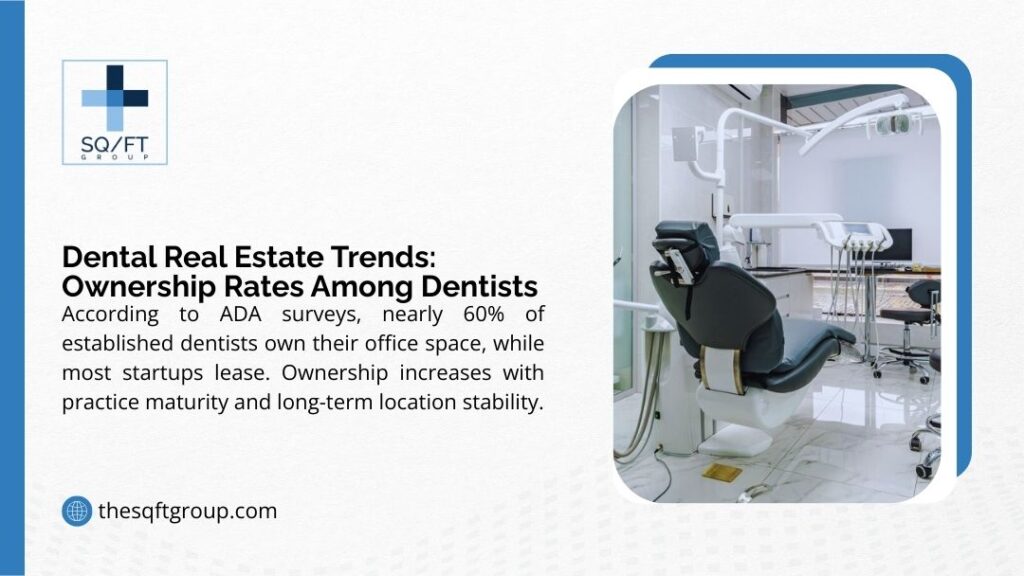
Upfront Costs and Financing
The biggest barrier to buying is the upfront capital requirement. Between the down payment, closing costs, and initial build-out, you could easily need $100,000 to $200,000 or more before you open your doors.
Student debt complicates financing for many dentists. Lenders calculate your debt-to-income ratio by dividing your total monthly debt payments by your gross monthly income.
If you’re already carrying $300,000 in student loans, adding a commercial mortgage on top can push your ratio too high for approval.
Some lenders offer specialty healthcare loans with more favorable terms for dentists and other medical professionals. These loans recognize that healthcare practices generate stable income and have lower default rates than many other small businesses.
When you’re trying to negotiate a dental office lease, you can often secure better terms than you might expect.
Landlords know dental practices are stable tenants who tend to stay long-term, so they may be willing to offer concessions like:
- Free rent during the build-out period
- Higher tenant improvement allowances
- Caps on annual rent increases
- Options to expand into adjacent space
- First right of refusal if the building goes up for sale
Long-Term ROI and Equity Considerations
Buying builds equity over time. Every mortgage payment includes a portion that goes toward principal, gradually increasing your ownership stake. If the property appreciates, you gain even more equity.
For example, a $500,000 property that appreciates 3% annually could be worth about $580,000 after five years.
But equity comes with opportunity cost. The capital you tie up in real estate can’t be used for other investments or practice growth.
If you could earn a higher return by investing that money in new equipment, marketing, or hiring additional staff, buying may not be the best financial choice.
Leasing preserves capital, as you keep your cash available for other needs like payroll, supplies, marketing, and technology upgrades. This flexibility matters most in the early years when cash flow is tight and patient volume is still building.
Total Cost Comparison Over Time:
| Scenario | 5-Year Total Cost | 10-Year Total Cost | 15-Year Total Cost |
| Buying (with appreciation) | Higher upfront, moderate total | Competitive with leasing | Often lower than leasing |
| Leasing (with annual increases) | Lower upfront, moderate total | Competitive with buying | Often higher than buying |
The crossover point varies by market. In some areas, buying becomes financially advantageous after seven to ten years. In others, leasing remains competitive even longer.
Cash Flow and Flexibility Implications
Cash flow management is critical for dental practices. You need predictable monthly expenses so you can plan for slower months and seasonal variations in patient volume.
Leasing offers more predictable cash flow in the short term. You know exactly what your rent will be for the next several years, and you don’t have surprise maintenance costs eating into your budget.
Buying creates less predictable cash flow because of maintenance and repair expenses. A failed HVAC system or leaking roof can cost $10,000 to $50,000 or more. You need cash reserves to handle these unexpected costs.
Early-stage practices often prefer leasing because it reduces risk. When you’re still building your patient base and proving the business model, you don’t want to be locked into a property you might outgrow or that might not work for your practice long-term.
Strategic Factors Beyond Finances
Financials aren’t the only factor that matters. Location, growth potential, regulatory requirements, and your future vision all play a role in this decision.
- Practice Stage Considerations
Your practice stage heavily influences which option makes more sense. New practices, growing practices, and established practices all have different needs and risk profiles.
New practices benefit from leasing because it reduces upfront capital requirements and maintains flexibility. You’re still figuring out your patient base, refining your services, and building your reputation.
Committing to a property before you’ve proven the business model adds unnecessary risk.
Growing practices face a tougher choice. If you’re confident in your growth trajectory and plan to stay in the same location for ten years or more, buying could make sense.
But if you might need to expand, relocate, or bring on partners, leasing gives you more options.
Established practices with stable patient volume and predictable revenue can often afford to buy. You have the cash flow to handle mortgage payments and maintenance costs, and you’re less likely to need significant changes in the near future.
Best Options Based on Practice Stage:
| Practice Stage | Recommended Option | Key Reasons |
| Startup (0-2 years) | Lease | Preserve capital, maintain flexibility |
| Growing (3-7 years) | Lease or buy (depends on growth plans) | Consider expansion needs, patient stability |
| Established (8+ years) | Buy (if staying long-term) | Build equity, control costs, stable income |
- Flexibility and Future Planning
Think about where you see yourself in five, ten, and fifteen years:
Do you plan to stay in this location indefinitely, or might you want to open additional locations or sell the practice eventually?
Buying ties you to a specific location. That commitment is harder to unwind, so it is worth reviewing the indicators that a move makes sense before you lock yourself into an address. If you decide to relocate, you’ll need to sell the building or find tenants to lease it. Selling commercial real estate takes time and comes with transaction costs that can eat into your profit.
Leasing gives you flexibility to adapt as your practice grows.
If you need more space, you can move to a larger location when your lease ends. If you want to retire or sell the practice, you’re not stuck dealing with property disposition.
Partnership considerations matter too. If you plan to bring on an associate who might eventually become a partner, buying complicates the ownership structure.
You’ll need to decide if the building is part of the practice sale or if you’ll separate real estate from operations.
Some dentists choose to buy the building through a separate entity and lease it to their practice. This strategy lets them build real estate equity while keeping the practice and property separate for tax and estate planning purposes.
- Regulatory and Zoning Considerations
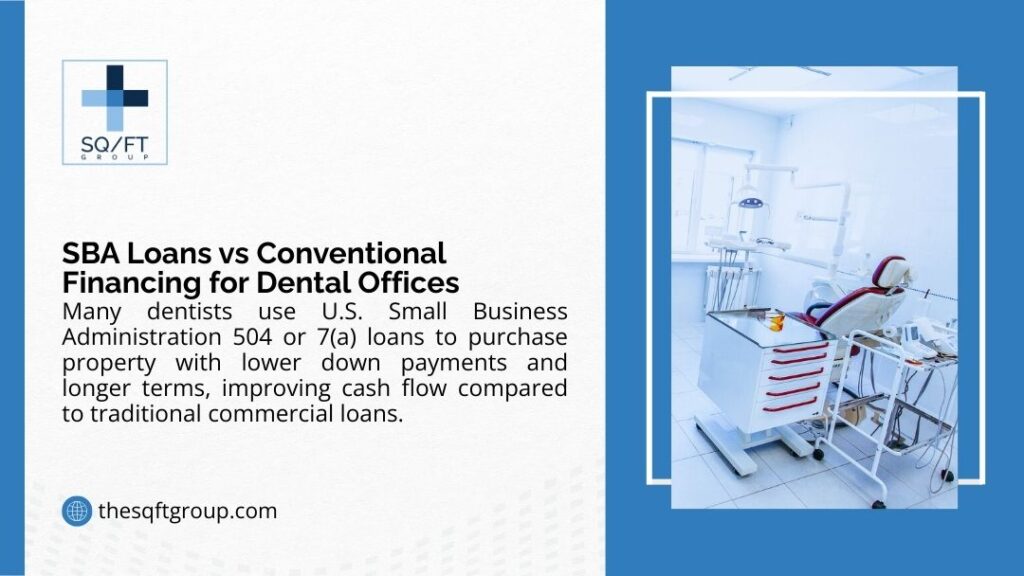
Dental offices face specific regulatory requirements that affect real estate decisions. You need proper zoning for medical or professional use, compliance with ADA accessibility standards, and approval for specialized systems like digital radiography.
Zoning regulations vary by municipality. Some areas restrict medical offices to specific zones or require special permits. Before you buy or lease, verify that the property is properly zoned for dental use and that you can obtain all necessary permits.
Building codes for dental offices are more stringent than for general commercial spaces. Key requirements include:
- Proper ventilation for sterilization areas
- Lead-lined walls for X-ray rooms
- Specialized plumbing for dental equipment
- Adequate electrical capacity for high-powered devices
- Compliant medical waste disposal systems
When choosing a location for dental practice, regulatory compliance should be part of your due diligence process. A property that seems perfect might require expensive upgrades to meet current codes, turning a good deal into a financial burden.
Decision Framework: How to Choose Between Buying and Leasing
Here’s a step-by-step framework to make a confident, data-driven decision about buying vs leasing a dental office space. This process helps you weigh the factors that matter most to your specific situation.
Step 1: Assess Your Financial Position
Start by evaluating your current financial situation honestly. Calculate your available capital for a down payment, your monthly cash flow, and your debt-to-income ratio.
List all your current debts including student loans, car loans, and credit cards. Add up your monthly payments and divide by your gross monthly income.
Lenders typically want this ratio below 43% for loan approval, though some healthcare-specific lenders are more flexible.
Calculate how much you can afford for a down payment without depleting your emergency fund. Financial advisors generally recommend keeping three to six months of operating expenses in reserve for unexpected costs and slower months.
Review your credit score and credit history. Lenders use this information to determine your interest rate and loan terms. If your credit needs improvement, consider waiting a few months to boost your score before applying for financing.
Step 2: Evaluate Practice Growth and Space Needs
Project your patient volume and revenue for the next five to ten years. Be realistic about growth rates. Most dental practices take three to five years to reach full capacity.
Think about the space needed for a dental practice based on your projected patient volume.
If you’re planning to start with three operatories but expand to five within a few years, you need to account for that growth now.
Consider your service mix. General dentistry requires different space than specialty practices. If you plan to add services like oral surgery or sedation dentistry, you’ll need additional space for recovery areas and monitoring equipment.
Location affects growth potential too. A rapidly growing residential area offers more long-term growth than a mature neighborhood with a stable population. Research demographic trends in the areas you’re considering.
Step 3: Compare Lease and Buy Scenarios Side by Side
Create detailed financial projections for both options. Include all costs: down payment or security deposit, monthly payments, taxes, insurance, maintenance, and build-out expenses.
Scenario Comparison Example:
| Cost Factor | Buying Scenario | Leasing Scenario |
| Upfront Capital Required | $125,000 | $15,000 |
| Monthly Fixed Cost | $3,800 (mortgage + tax + insurance) | $4,500 (rent) |
| Annual Maintenance Reserve | $6,000 | $0 (landlord’s responsibility) |
| 5-Year Total Investment | $353,000 | $285,000 |
| Equity Built (5 years) | ~$60,000 (plus appreciation) | $0 |
Run the numbers for multiple time horizons. What does each option cost over five years? Ten years? Fifteen years? Include realistic estimates for rent increases and property appreciation.
Factor in tax implications. Talk to your accountant about how each option affects your tax situation. Mortgage interest and depreciation offer different benefits than rent deductions.
Step 4: Factor in Risk and Flexibility
Risk tolerance varies by person. Some dentists feel more secure owning their building. Others prefer the flexibility and reduced responsibility that comes with leasing.
Consider worst-case scenarios. What happens if your practice doesn’t grow as quickly as expected?
If you’re leasing, you have options to downsize or relocate. If you own, you’re stuck with mortgage payments and maintenance costs regardless of practice performance.
Think about best-case scenarios too. If your practice grows faster than expected and you need to expand, which option gives you more flexibility to adapt?
Evaluate your personal situation. How stable is your personal life? If you might need to relocate for family reasons or if your spouse’s job could require a move, leasing offers an exit strategy.
Step 5: Make a Decision and Plan Ahead
After working through steps one through four, you should have a clear picture of which option aligns better with your goals, financial situation, and risk tolerance.
Document your decision-making process. Write down the factors you considered, the numbers you calculated, and the reasoning behind your choice because this documentation helps if you ever question your decision later.
Create a timeline for implementation:
- If you’re buying, how long will loan approval take?
- When do you need to close?
- If you’re leasing, when does the current tenant’s lease expire?
- How much time do you need for build-out before opening?
Plan for contingencies. What’s your backup plan if financing falls through? If you can’t find the right property in your target area? Having alternatives reduces stress and keeps your practice opening on schedule.
Should You Buy or Lease a Dental Office Space?
The decision about buying vs leasing a dental office space is one of the most important financial choices you’ll make as a practice owner. Both options have merit depending on your practice stage, financial position, growth plans, and risk tolerance.
New practices often benefit from leasing to preserve capital and maintain flexibility during the critical startup phase.
Established practices with stable income and long-term location plans may find buying offers better value and control over time.From our work with dental professionals across different practice stages, we’ve seen that the dentists who make the best decisions are those who take time to run detailed financial projections, honestly assess their growth trajectory, and plan for multiple scenarios.

Frequently Asked Questions
Should I Buy or Lease Dental Office Space?
For new dental practices, leasing is often the smarter choice because it minimizes upfront costs and provides flexibility as you grow and learn your patient base.
For established dental practices with stable cash flow and a clear long-term plan, buying a dental office can build equity and offer greater control over your space.
How much does it cost to build out a dental office?
Costs range significantly depending on whether you’re starting from raw space or renovating an existing dental office. Factor in specialized plumbing, electrical work, radiography rooms, and equipment installation.
Can a dentist buy a dental office property while carrying student loan debt?
Yes, but lenders will evaluate your debt-to-income ratio carefully. Most lenders want your total monthly debt payments to be less than 43% of your gross monthly income. Some healthcare-focused lenders offer more flexible terms for medical professionals with student debt.
What happens if my practice outgrows the space I buy?
You have several options: expand or renovate if the property allows it, buy additional space nearby, or sell the building and relocate. Planning ahead reduces this risk by choosing a property with expansion potential or buying more space than you currently need.
How long are typical dental office leases?
Dental office leases commonly run five to ten years, often with renewal options. Longer leases may offer better rates but reduce flexibility. Negotiate options that let you expand into adjacent space if it becomes available.
Make Confident Dental Real Estate Decisions with Expert Guidance
SQ/FT Commercial Brokerage specializes in helping healthcare professionals navigate these complex real estate decisions. We guide you through every step so you can buy, lease or sell commercial real estate with confidence. If you want to get an expert consultation on whether you should buy or lease a dental practice, get personalized guidance from our dental real estate experts today!