

If you are about to open or expand a medical office, one of the first questions to answer is how much space is needed for a medical practice.
Space requirements depend on your specialty, provider count, patient volume, and the services you plan to offer. Before you sign a lease or commit to a purchase, you need a clear picture of what your practice actually requires.
A solid way to choose a location for medical practice strategy matters too, but space calculation comes first.
This guide covers typical square footage ranges by practice size, room-by-room breakdowns, specialty differences, and a step-by-step method to calculate your own space requirements.
How Much Space Does a Medical Practice Typically Need?
The general range for a medical office sits between 1,500 and 8,000-plus square feet. That wide range reflects real differences in practice scale. A solo physician with low patient volume has fundamentally different needs than a multi-provider clinic with several specialties under one roof.
How much space is needed for a medical practice at each scale comes down to three things: how many providers work there, how many patients they see per day, and what services those patients receive.
| Practice Type | Estimated Square Footage |
| Solo provider | 1,500 – 2,500 sq ft |
| Small group (2–3 providers) | 2,500 – 4,000 sq ft |
| Multi-provider clinic | 4,000 – 8,000+ sq ft |
A solo primary care physician with two exam rooms and a small waiting area can operate efficiently in 1,500 square feet. A three-provider group with procedure rooms and a separate lab area will need closer to 4,000.
These figures are starting points, not firm limits. The sections below break each variable down further.
Space Requirements by Room Type
Room-by-room analysis is the most reliable method to estimate how much space is needed for a medical practice. Many practice owners calculate total square footage without accounting for each functional area separately, which leads to layout problems after move-in.
| Area | Approximate Size Range |
| Exam room | 100 – 120 sq ft |
| Reception area | 150 – 300 sq ft |
| Waiting room | 200 – 500 sq ft |
| Staff break room | 100 – 200 sq ft |
| Private office | 120 – 200 sq ft |
| Storage | Varies by specialty |
A few layout principles help with this:
- Exam rooms need corridor access. Beyond sizing, the HIPAA requirements for medical office layout shape where reception windows, records storage, and consultation rooms can sit within your floor plan. Four exam rooms require hallway space between them that adds to total square footage.
- Waiting areas must accommodate peak patient volume, not the daily average. A practice with 15 patients in the morning rush needs seating for 10 to 12 at once.
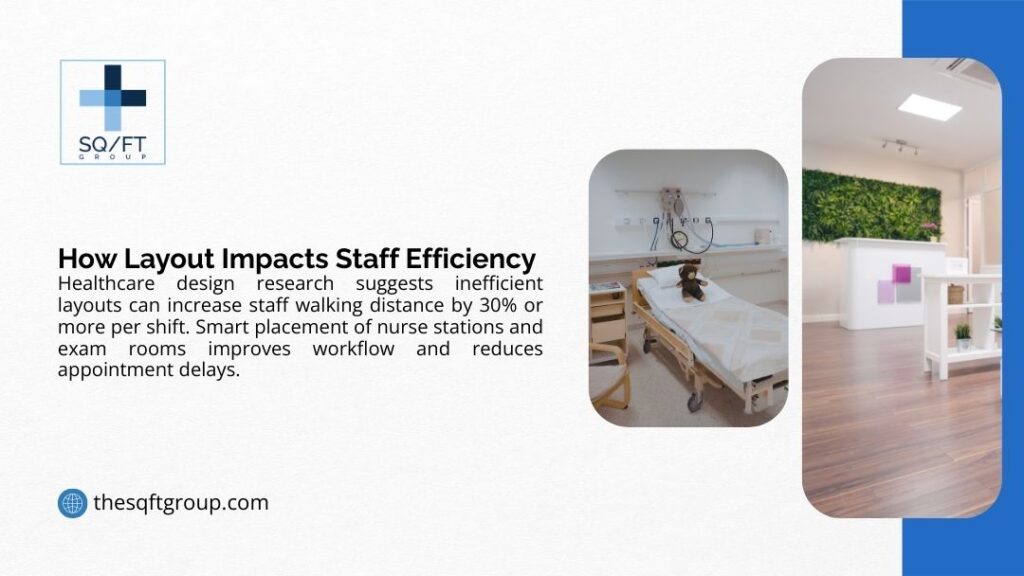
- Staff workflow determines where support areas should sit. A nurse station placed far from exam rooms creates unnecessary movement and slows patient throughput.
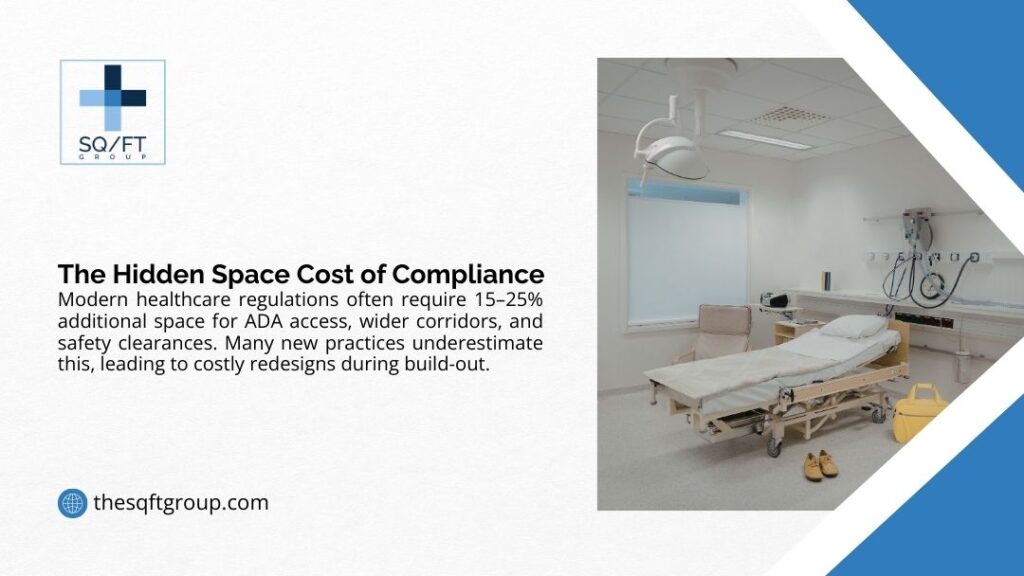
The numbers above reflect federal ADA accessibility standards, which also govern corridor widths, restroom dimensions, and exam table clearances.
These requirements reduce usable square footage in any layout, so the actual footprint always needs to exceed the sum of individual room estimates.
How Specialty Type Affects Space Needs
Specialty drives space requirements more than most practice owners expect. How much space is needed for a medical practice varies significantly across disciplines because each one carries different equipment, procedure, and patient flow needs.
| Specialty Type | Space Requirement Trend |
| Primary care | Moderate |
| Specialty medicine | Moderate to high |
| Dental practice | High |
| Surgical clinic | High |
Primary Care and Family Medicine
Primary care practices typically need 2,000 to 3,500 square feet for a one to two provider setup. The layout centers on exam rooms, a waiting area, and a small administrative zone.
No specialized procedure rooms are required in most cases, which keeps the total footprint manageable.
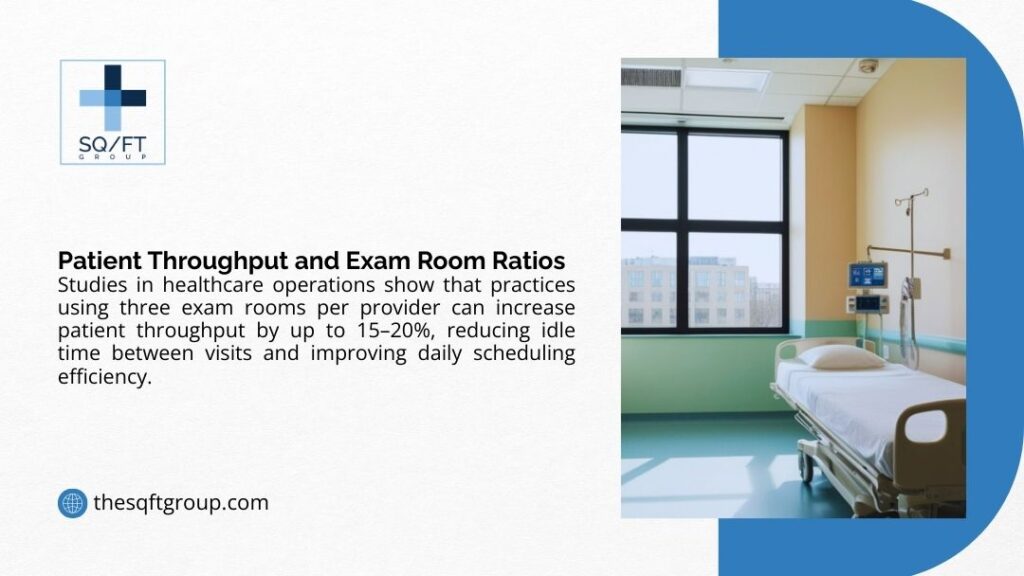
Patient flow in primary care is relatively predictable. Two exam rooms per provider is the standard baseline, with a third added when appointment overlap is high.
Specialty Clinics (Dermatology, Cardiology, and Others)
Specialty clinics require additional procedure rooms and equipment storage beyond what a primary care office needs. A cardiology practice may need a dedicated stress test room.
A dermatology clinic needs space for minor surgical procedures separate from standard exam areas.
These additions push square footage up by 500 to 1,500 square feet compared to a primary care practice at the same provider count.
Dental Practices
Dental offices operate under different space logic. Each operatory typically needs 120 to 150 square feet, plus a dedicated sterilization area, imaging room, and lab space.
A two-chair dental office rarely fits comfortably below 1,500 square feet, and a four-chair practice generally needs 2,500 to 3,500 square feet.
The dental office build-out cost per square foot reflects these specialized requirements, with plumbing, electrical, and cabinetry costs running higher than in standard medical offices.
Early space calculation matters more in dental than in most other specialties for this reason.
Key Factors That Determine How Much Space You Need
Two practices with the same number of providers can have very different space requirements. The factors below explain why.
| Factor | Impact Level |
| More providers | High |
| Specialty procedures | High |
| High patient volume | Medium |
| Future expansion plan | Medium to high |
Number of Providers and Staff
Each provider typically needs two to three exam rooms to maintain efficient patient flow. A solo physician with two exam rooms can see patients in one room while another patient prepares in the second. Add a second provider and you need four to six exam rooms at minimum.
Support staff also need a dedicated workspace. Front desk personnel, nurses, and medical assistants each require functional space separate from clinical areas.
Patient Volume
Higher daily patient volume means larger waiting areas and faster corridor traffic. A practice that sees 30 patients per day can operate in a smaller waiting room than one that sees 60. Plan waiting area capacity around your peak hour, not your daily average.
Growth Plan
How much space is needed for a medical practice depends heavily on where you expect to be in three to five years. A practice that plans to add one provider and two services in year three needs space that can accommodate that growth now.
Relocating a medical office mid-lease is expensive and operationally disruptive.
With our experience advising healthcare tenants, we consistently see practices underestimate their three-year growth trajectory.
Also, review tenant improvement allowance for medical offices early, as landlords on healthcare properties often contribute toward build-out costs that support your specific layout needs.
Services Offered
Practices that offer procedures, minor surgery, or in-house imaging need dedicated rooms for each. These cannot share space with standard exam rooms due to infection control, equipment requirements, and patient flow.
Each added service category increases your minimum viable square footage.
Minimum Space Requirements for a Medical Office
There is a functional floor at which a medical office simply cannot operate safely or efficiently. For most specialties, that floor sits around 1,500 square feet.
| Setup Type | Square Footage |
| Bare minimum setup | ~1,500 sq ft |
| Comfortable small practice | 2,000 – 2,500 sq ft |
At 1,500 square feet, a solo provider can fit two exam rooms, a small waiting area, a reception desk, one private office, and basic storage. Below that threshold, workflow becomes congested and patient experience suffers.
Regulatory requirements also reduce usable space in any floor plan. ADA-compliant restrooms alone typically consume 50 to 80 square feet, and accessible corridor widths (minimum 60 inches for two-way traffic in clinical settings) reduce the number of rooms that can fit on a given footprint.
How to Calculate the Space You Need
“How much space do I need for a medical practice” is best answered through a structured calculation, not a rough estimate. Follow these three steps before your first site visit.
Step 1: Count Your Providers
Start with the number of active providers. Each provider requires two to three exam rooms at standard patient volume. A two-provider practice needs a minimum of four exam rooms as a starting point.
Step 2: Estimate Exam Room Square Footage
Multiply the number of exam rooms by 110 square feet (the midpoint of the 100 to 120 square foot standard). For four exam rooms, that equals 440 square feet for clinical space alone.
Step 3: Add Common Areas
Layer in all non-clinical zones to arrive at your total. Once you have a square footage target, the medical practice expansion checklist covers what comes next, from lease negotiation through buildout and grand opening.
| Component | Estimated Space |
| Exam rooms (4 rooms at 110 sq ft) | 440 sq ft |
| Reception and waiting | 300 – 700 sq ft |
| Staff areas | 200 – 400 sq ft |
| Storage | 100 – 200 sq ft |
| Private office | 120 – 200 sq ft |
| Total before circulation buffer | 1,160 – 1,940 sq ft |
Add 15 to 20 percent to that total to account for corridors, walls, and mechanical areas. That buffer brings a four-exam-room practice into the 1,400 to 2,300 square foot range, which aligns with the industry standard for small group practices.
Common Mistakes When Selecting Medical Office Space
Mistake 1: Plan Only for Current Staff
Most practices that relocate within five years do so because they ran out of space. Capacity is only one of several signs your practice has outgrown its space, and the earlier you spot them, the more negotiating room you have. If you are at full capacity on day one, you have no room to add a provider, a new service, or even a part-time specialist. Plan for where you want to be, not just where you are today.
Mistake 2: Ignore Layout and Workflow
Raw square footage does not equal functional space. A 2,500-square-foot office with a poor layout can perform worse than a 2,000-square-foot office designed around actual patient and staff movement. Workflow analysis should happen before you commit to any floor plan.
Mistake 3: Skip Compliance Review Early
Zoning, ADA, and healthcare building codes all affect what you can do with a given space. Some commercial properties require significant modification before they qualify for medical use. Discovering this after lease execution is costly.
Review your buying or leasing medical office space options with a qualified broker and verify code compliance before final lease negotiations begin.
Frequently Asked Questions
How many square feet does a medical practice need?
Most solo practices need 1,500 to 2,500 square feet. Small group practices (two to three providers) typically need 2,500 to 4,000 square feet. Multi-provider clinics often exceed 4,000 square feet depending on services offered.
How much space is required per exam room?
Standard exam rooms need 100 to 120 square feet each. Specialty procedure rooms may require more. Dental operatories typically need 120 to 150 square feet per chair.
What is the average size of a primary care office?
A solo primary care physician typically operates in 1,500 to 2,500 square feet. A two to three provider group practice generally needs 2,500 to 3,500 square feet to maintain efficient patient flow.
How much space does a small medical practice need?
A small practice with one provider and two exam rooms can operate at around 1,500 square feet. The comfortable lower threshold for a small practice that plans any growth sits at 2,000 square feet.
How do I calculate space requirements for my practice?
Count your providers, multiply exam rooms by 110 square feet, add common areas (reception, waiting, staff, storage), then add 15 to 20 percent for corridors and mechanical areas. This gives a reliable starting estimate before any site visit.
Plan Your Medical Office Space With the Right Brokerage Team
“How much space do I need for a medical practice” is a question with long-term financial consequences either way.
SQ/FT Commercial Brokerage works with physicians, clinic administrators, and healthcare operators across New York, New Jersey, and Connecticut.
Our team evaluates properties for clinical suitability, negotiates lease terms that account for build-out needs, and selects locations that support both current operations and future expansion.
If you are in the early stages of site selection or approaching a lease renewal, contact SQ/FT Commercial Brokerage today. We bring the healthcare real estate expertise that general brokers cannot match.