

When physicians and dentists prepare to sell, the lease is usually the last item on the list, and that’s the problem. It’s one of the most overlooked variables in a practice sale, and depending on how it’s structured, it can quietly add value or drag your price down. This guide answers the core question directly: what happens to your lease when you sell, whether you rent from a landlord or own the building yourself.
First question: do you rent, or do you own the building?
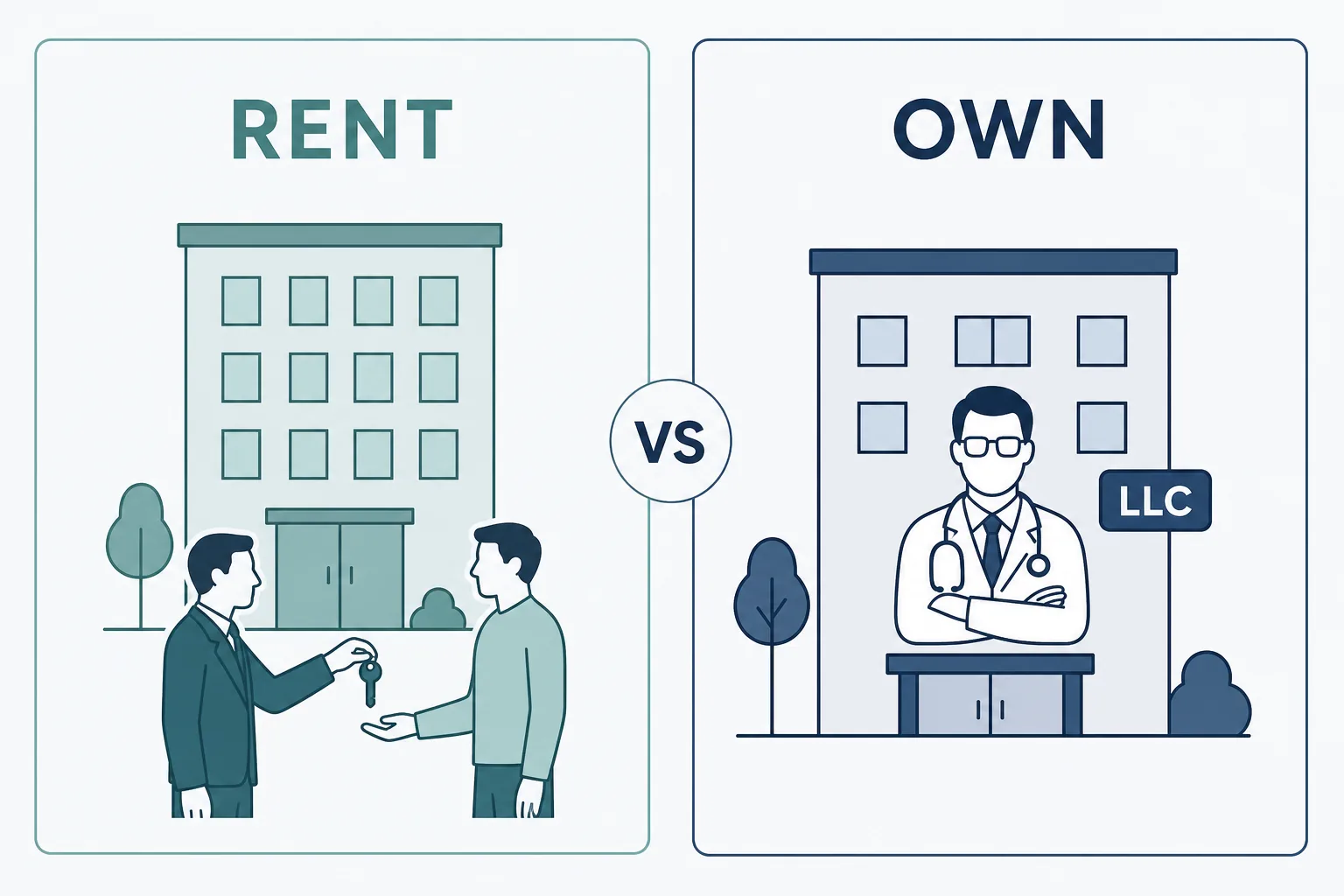
Everything downstream depends on your setup. There are two paths:
- You lease from a third-party landlord. The lease is a contract you’ll need to hand off, extend, or exit.
- You own the real estate, often through a separate LLC that leases the space back to your practice.
Plenty of physicians own their building personally and rent it to their own practice. That dual role changes the whole transaction, because you’re no longer selling one asset, you’re selling, or keeping, two. The rest of this article follows both paths.
If you lease from a third-party landlord
Leases usually don’t transfer automatically
A buyer doesn’t inherit your lease just because they bought your practice. Most commercial leases require the landlord’s written consent to assign the lease to a new tenant, or to sublease the space. If your lease is silent on this, or prohibits assignment outright, you may need the landlord at the table before a deal can close.
Check your assignment and “change of control” clauses
How you structure the sale matters. In an asset sale, the buyer purchases the practice’s assets, which typically triggers the assignment clause. In a stock (or equity) sale, ownership of the entity changes hands, which can trip a separate “change of control” provision. Either way, read the fine print: a personal guarantee you signed years ago may survive the sale, leaving you liable for rent long after you’ve walked away. A structured, well-documented handoff is one of the eleven essential steps to purchasing or selling a medical practice that experienced buyers expect their sellers to have handled.
Reach agreement on proceeds allocation now, in the event a deal happens * If medical real estate is owned, ensure lease is arms-length & triple …
Remaining term can make or break the deal
A buyer needs runway. If only 18 months remain with no favorable renewal options, that uncertainty can stall or discount an offer. Before you list, it’s often worth renegotiating or extending your terms so the buyer inherits stability. This is the moment to understand how to negotiate a dental office lease, securing a longer term and cleaner assignment language now protects your sale price later.
If you own the building: the physician-landlord scenario
You’re negotiating two assets at once
When you own the real estate, you’re selling the practice and the property. You have three choices: sell both together, keep the building and lease it to the buyer, or execute a sale-leaseback. Each carries different cash, tax, and risk consequences.
| Option | What it means |
|---|---|
| Sell both together | The practice and the property transfer to the buyer as one package. |
| Keep the building and lease it to the buyer | You retain the real estate and become the buyer’s landlord. |
| Execute a sale-leaseback | You sell the building and sign a lease at the same time to keep operating. |
A signed lease makes your building worth more
Here’s the leverage most owners miss. As both landlord and tenant, you control occupancy. Signing a market-rate lease with a reasonable term before you sell converts the building from an empty box into a stabilized, income-producing asset. Investors pay more for a property with a reliable tenant already in place, value created out of paperwork you already control.
Investors pay more for a property with a reliable tenant already in place, value created out of paperwork you already control.
The double-exposure risk
Owning both the practice and its building concentrates your retirement in a single location. If the market softens or the buyer struggles, you feel it twice, as a seller and as a landlord. The buyer’s success becomes your rent check. Working through that concentration early is where structuring the transaction deliberately, the kind of work covered under dental real estate solutions, pays off. The buyer’s type shapes the outcome too: research from Harvard Business School’s Working Knowledge examines how ownership structure and acquirer type, private equity, a hospital system, or an individual, reshape what happens to a medical practice and the real estate beneath it.
The sale-leaseback option, explained
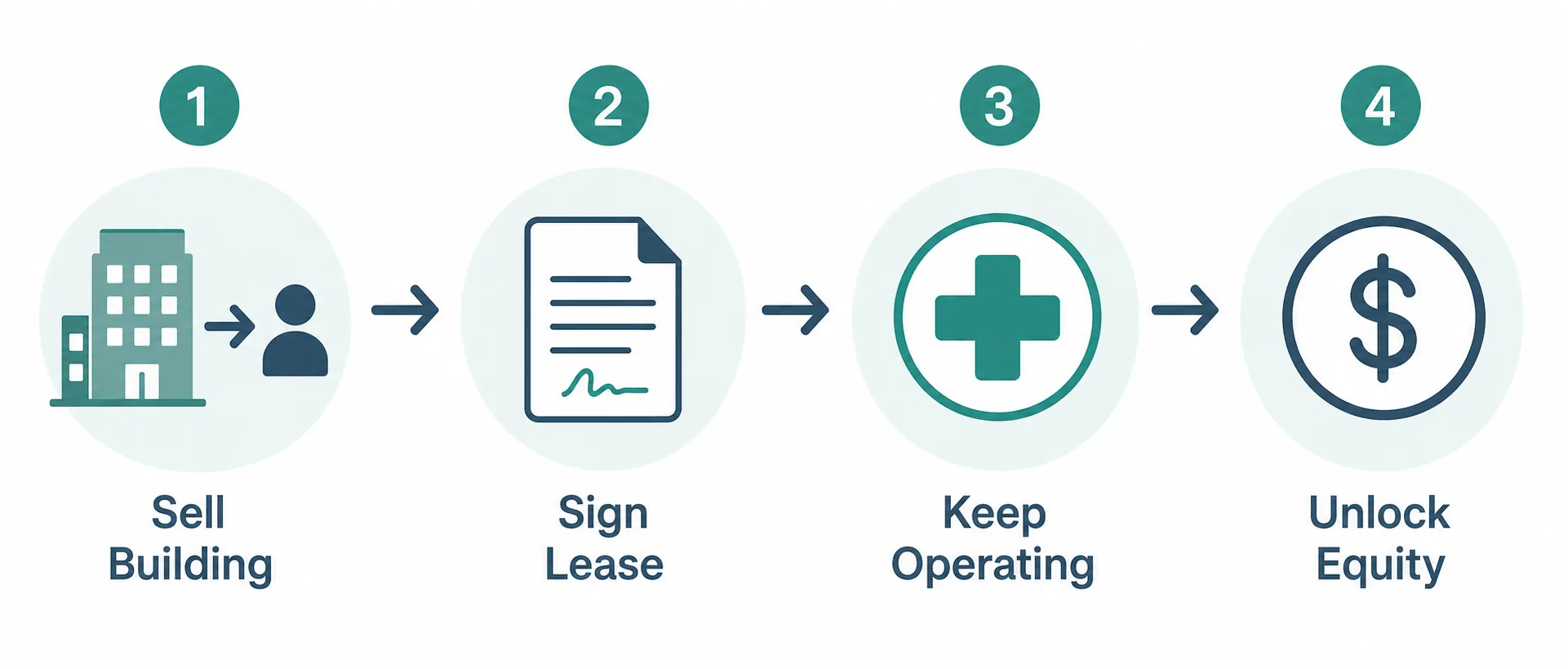
A sale-leaseback means you sell the building to an investor and simultaneously sign a long-term lease to keep operating, or you hand a clean, ready-made lease to your practice buyer.
With a sale leaseback, the practice is sold and a lease is signed at closing. The new owner takes over the lease, allowing you to sell the real estate at …
| Pros | Cons |
|---|---|
| You unlock equity trapped in the property | You lose flexibility |
| You create a predictable occupancy story | You’re now a tenant subject to rent escalations and terms you no longer control |
| You give your buyer a turnkey space |
A sale-leaseback tends to fit when you want to retire soon but keep the practice running for a buyer, need liquidity from the real estate now, value predictable occupancy over long-term control, and hold a building an investor would consider stable. If you plan to reoccupy or redevelop the space later, it’s usually the wrong move.
How the lease affects your practice’s sale price
Buyers evaluate rent as a percentage of collections. Above-market rent hurts the buyer’s economics and drags down your valuation. Below-market rent looks great, until due diligence reveals it won’t survive a renewal or a new landlord. Location quality matters as well: a strong site supports both patient volume and resale value, which is why the choice matters as much at exit as at launch. If you’re weighing a move or a new site, knowing how to choose the right location for your practice protects your valuation on both ends. Dental buyers, in particular, scrutinize build-out obligations and operatory-specific infrastructure costs baked into the lease, surface those early rather than letting them emerge in diligence.
Tax implications of selling, including the real estate
The structure of your sale drives the tax bill. An asset sale and a stock sale treat the practice and the building very differently, and buyers and sellers often want opposite structures for tax reasons. When you own the real estate, the building is frequently handled as a separate transaction, with its own concerns around capital gains and depreciation recapture on the property you’ve been writing down for years. Valuing the building independently of the practice, another of the documented steps for a sound practice transaction, keeps both sides of the deal clean. The exact rates and treatment depend on your entity, basis, and jurisdiction, so confirm the numbers with your CPA or tax advisor before you commit to a structure.
Common seller questions, and state-specific quirks
How do I position the sale?
One scenario comes up again and again: a health system or hospital wants the land and location as much as the practice, while an individual buyer may want only the practice and prefer to lease. Positioning means knowing which buyer you’re courting and packaging the real estate accordingly, bundled, retained and leased, or sold separately.
Does California change anything?
In California, corporate-practice-of-medicine rules restrict who can own a medical practice, which can affect how the entity, and therefore the lease and real estate, is structured in a sale. Lease and entity structuring often differ by state, so work with counsel licensed where your practice operates rather than relying on general rules.
A pre-sale lease checklist
- Pull your lease and note the remaining term, renewal options, assignment/consent clauses, and any personal guarantees.
- Start the landlord conversation early, request an estoppel certificate so the buyer sees clean terms.
- Decide your real-estate strategy (sell, keep and lease, or sale-leaseback) before you list.
- Value the building independently of the practice so neither figure hides in the other.
- Renegotiate or extend the lease term now if it’s too short to attract a buyer.
Frequently asked questions
What happens to my lease when I sell my medical practice?
Can I keep the building and lease it to the buyer?
What are the tax implications of selling a medical practice?
Do I need landlord approval to sell my practice?
Is a sale-leaseback a good idea before selling?
The owners who protect the most value treat the real estate as a deliberate part of the sale, not an afterthought. Map out your lease and building strategy early, and you’ll walk into negotiations with leverage instead of surprises.