

Moving a practice is two projects running at once: an operational build-out and a patient-retention risk. Most of the patient loss is preventable. Attrition rarely comes from the move itself, it comes from patients who never heard about it, a new address that feels too far, or a transition that made their care feel interrupted. This playbook lays out a timeline-driven approach so continuity of care, revenue, and referrals all survive the move.
Why Patients Leave During a Relocation (and How Far Is Too Far)
Patients leave for three reasons: they never got the message, the new location is inconvenient, or their continuity of care felt broken. Of the three, travel burden is the biggest churn driver. A scoping review of citizens’ perspectives on relocating care found that willingness to follow a provider hinges on added travel time and on how clearly the change is communicated, the further and the quieter the move, the more patients drift.
There’s no universal mileage cutoff. The practical rule: the more you add to a patient’s drive time, transit hassle, or parking difficulty, the more attrition you should expect. A few minutes across town is usually absorbed. A relocation that doubles someone’s commute, or removes easy parking or a bus line, is where you start losing the people who have other options nearby.
Start Early, Your Relocation Timeline (12+ Weeks Out)
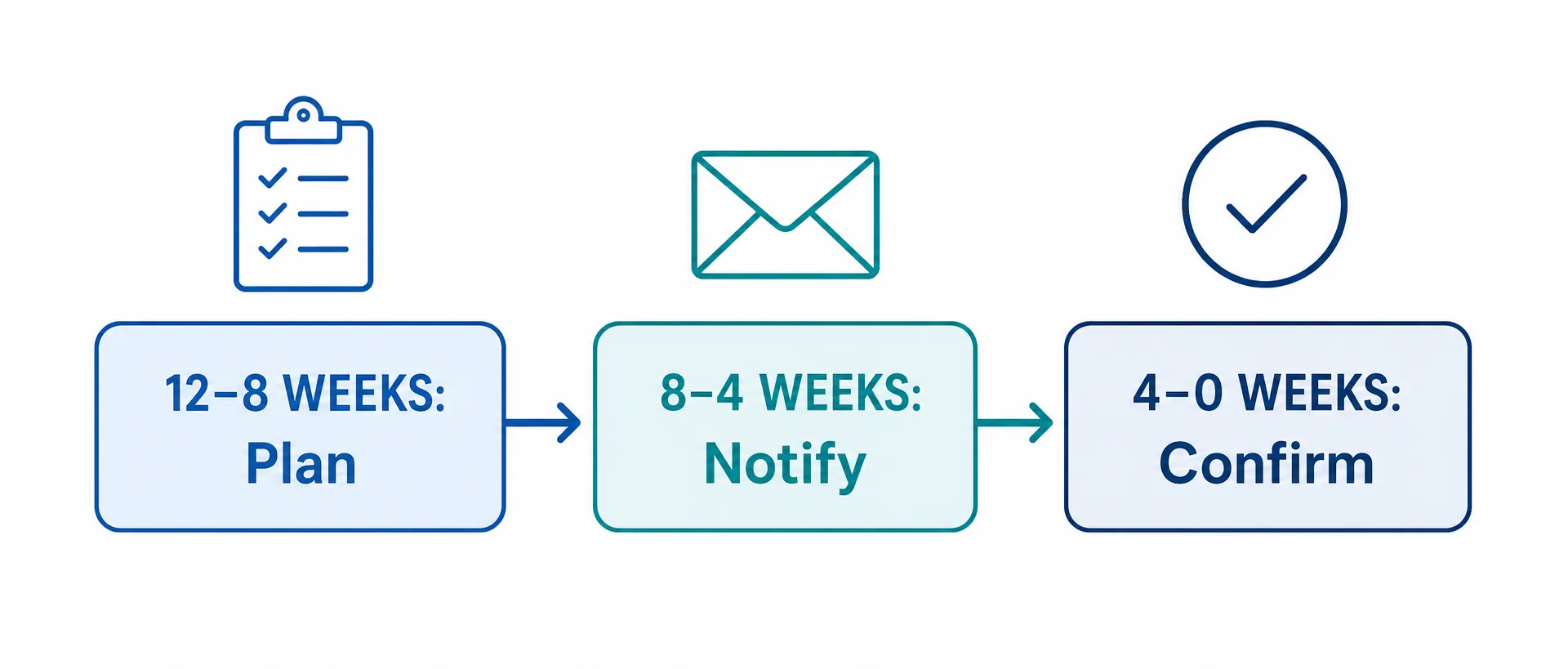
Retention is won on the calendar. Give yourself at least twelve weeks and work in phases.
| Phase | Focus | What happens |
|---|---|---|
| 12–8 weeks out | Internal planning | Finalize the lease and build-out schedule, lock a move date, and brief your staff before anyone hears it elsewhere. This is also the window to map how patients will physically reach the new site. |
| 8–4 weeks out | Notify payers and go public | Notify payers, order signage, and begin patient notifications. The first mailed letters and portal messages go out now. |
| 4–0 weeks out | Remind and confirm continuity | Send reminder waves, confirm records and scheduling systems will carry over without a gap, and verify the phone line stays live. The final two weeks are for confirmations, not surprises. |
12–8 weeks out, internal planning
For a sequenced checklist tailored to practice moves, our complete guide to dental practice relocation walks through the same planning cadence and notification lead times.
Notify Payers and Protect Your Credentialing
An address change has to reach payers immediately, because reimbursement, and indirectly patient access, depends on it. Update your CAQH profile, notify commercial payers of the new service location, and revise your Medicare provider enrollment records and Medicaid enrollment.
Complexity scales with distance. A move within the same city or region is often a straightforward address update. Crossing state lines can trigger new state licensure and fresh credentialing timelines that run for months, which is why out-of-state moves need the longest runway. A credentialing lapse doesn’t just stall cash flow; it can force patients out of network or delay appointments, and that friction is exactly what pushes them to another provider.
Tell Your Patients the Right Way
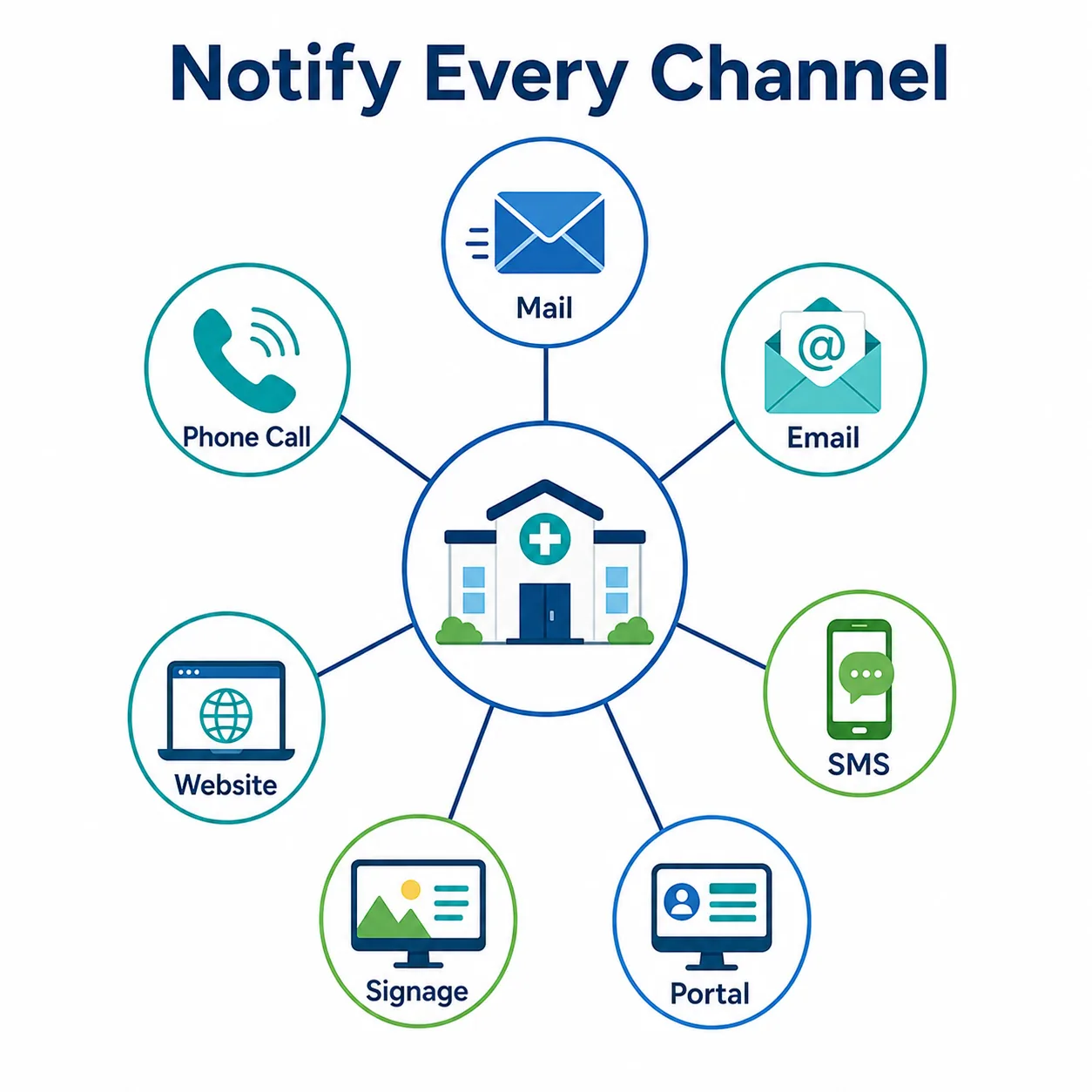
Communication is the number-one retention lever, and one channel is never enough. Layer them: mailed letters, email, SMS, patient portal messages, in-office signage, a website banner, and a phone call for elderly or high-value patients who may miss a digital notice. Location and access shape the care relationship deeply, the AMA Journal of Ethics analysis of location and medical practice patterns underscores how much geography influences that relationship, which is why a change of address deserves deliberate, repeated messaging.
What every relocation notice should include
- The new address, with a map link and directions
- The exact date you open at the new location
- Parking and public-transit details
- A clear note that your phone number is unchanged (if it is)
- Reassurance that records transfer automatically and appointments continue
Timing and repetition
Announce the move roughly two to three months out, then repeat.
One notice gets missed; three across different channels gets remembered.
Done right, this also protects you legally and ethically. Patient abandonment occurs when a provider ends care without adequate notice or a path to continued treatment, a proper relocation is the opposite. Proactive communication is what keeps a move firmly on the right side of that line, a point reinforced by research on general practitioners’ perspectives on relocating care. Give reasonable notice, keep records accessible, and offer referrals for anyone who genuinely can’t follow you.
Keep Continuity of Care Seamless
Patients fear disruption more than distance. If records, appointments, and prescriptions carry over without a hiccup, a longer drive becomes a minor inconvenience rather than a reason to leave.
Records, scheduling, and phone continuity checklist
- Migrate the EHR and confirm records are intact and searchable before day one
- Keep the scheduling line and patient portal live throughout the move
- Port the phone number so no call goes unanswered
- Ensure no gap in active prescriptions, refills, or pending referrals
Treating the move as an operational-resilience exercise pays off. Guidelines for resilient performance during hospital facility relocation show that facilities which plan explicitly for continuity, rather than assuming systems will simply follow, avoid the service gaps that erode patient trust.
Choose a Location Patients Will Actually Follow You To
Retention starts before you sign the lease. Proximity to your current site, a reasonable drive-time radius, visibility, ample parking, and transit access all determine whether patients follow through. No communication plan can rescue a site that’s genuinely inconvenient. Weigh these factors deliberately using our guide on how to choose the right location for your practice before you commit.
Budget for the Hidden Costs of Moving
Under-budgeting forces rushed moves, and rushed moves hurt patients. The expenses that quietly blow up a timeline: lost production days during downtime, build-out overruns, new signage, IT and phone re-cabling, updated stationery and marketing, re-credentialing delays that pinch cash flow, and overlapping rent when leases don’t align.
Pad your budget and your schedule for these. Financial stability during the move is what lets you keep staff, open on time, and avoid the corner-cutting patients notice.
Update Your Digital Footprint So Patients Can Find You
Inconsistent NAP data, name, address, and phone number, sends patients to the wrong door and buries you in search. Update all of it before you open.
- Google Business Profile (address, hours, and a move note)
- Your website contact page, footer, and schema
- Insurance and health-plan provider directories
- Third-party directories, maps, and review platforms
Consistency across every listing is what makes sure a patient searching your name at the old address still lands at the new one.
Don’t Forget Your Staff and Referral Network
Two silent patient-loss vectors get overlooked in a move: staff attrition and dropped referral relationships. If a trusted front-desk lead or hygienist leaves because the commute changed, patients feel it. Brief your team early, address their concerns about the new location directly, and handle any partnership or transition issue cleanly, our guide on how to avoid disputes in a dental practice transition covers the agreements worth settling in advance.
Then re-establish your referral network at the new address in person. Referring providers won’t chase down your new location on their own; a brief note or visit keeps that pipeline intact.
Frequently asked questions
How can a medical provider avoid patient abandonment?
How far can I move before patients stop following me?
How soon before the move should I tell patients?
Do I need to notify insurance companies when I relocate?
Will I lose patients if I move across town?
Plan the Move Before It Plans You
Early planning, the right location, and clear, repeated communication turn a relocation into a non-event for your patients. Map the timeline, protect continuity of care, and choose a site your patients can reach, and work with an experienced commercial real estate partner who understands that a practice move is measured in retained patients, not just square footage.